WHY ‘GOING GREEN’ BUILDS PRODUCTIVITY
08 Jul 2015
As we spend more time indoors, we are falling increasingly out of step with the rhythms of our natural environment. But what impact does ‘green building’ play in our quest to stay happy and healthy?

Gone are the days when nature’s cues, like the sun dipping over the horizon or the light growing dim, were the definitive signals that it was time to pack up and head home for the day. Most of us spend our days indoors – and for many of us, this means working in artificial light and inhaling stale air.
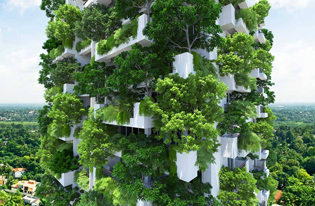


Despite our reputation for a love of the outdoors, Missing Trees: The Inside Story of an Outdoor Nation, commissioned by Planet Ark in 2013, found that one third of Australians aged between 14 and 64 spend less than two hours each week engaged in outdoor recreational activities.
For the last few decades, environmental psychologists have gathered evidence to support the positive impacts of greenery on our health and well-being.
According to American biologist Edward Wilson, humans have an innate need to connect with nature. Wilson coined the term ‘biophilia’ to describe this need. Recent research shows that people who live in urban areas with more green space tend to report greater well-being, less mental distress and higher satisfaction with life.
Studies have found that on average, employees whose workspaces provided a visual connection to nature by overlooking trees or landscapes took 11 fewer hours of sick leave per year compared to the control group whose offices and desks provided no view of the outdoors. The workers who enjoyed a visual connection to nature also took shorter breaks than their control group counterparts.
The financial case for good indoor environment quality in offices is just as strong. Prevention is much better than a cure, and dollars devoted to green features, internally and externally, that prevent us from getting sick in the first place and contribute to our overall well-being are certainly well spent.
The WELL Building Standard (WELL) is a new building assessment tool that is gathering momentum. Launched in 2014 and third-party certified through Green Business Certification Inc, WELL focuses on the potential of our built environment to support human health and wellness, assessing buildings against seven categories of air, water, nourishment, light, fitness, comfort and mind.
The emergence of the WELL Standard highlights what sustainable development professionals have known for years: what’s good for the environment is good for people too. By facilitating connections to nature in our built environment we create real opportunities for workplace well-being and preventative health by design.