SYDNEY FISH MARKET OPENS
28 Jan 2026
Described as Sydney Harbour's most significant development since the Opera House in 1973, the Sydney Fish Market has officially opened to the public. Taking pride of place at Blackwattle Bay, the design instantly catches the eye, turning one of the world's largest working fish markets into not just a place of a seafood trade but also of retail and dining destinations, all under one spectacular roof.
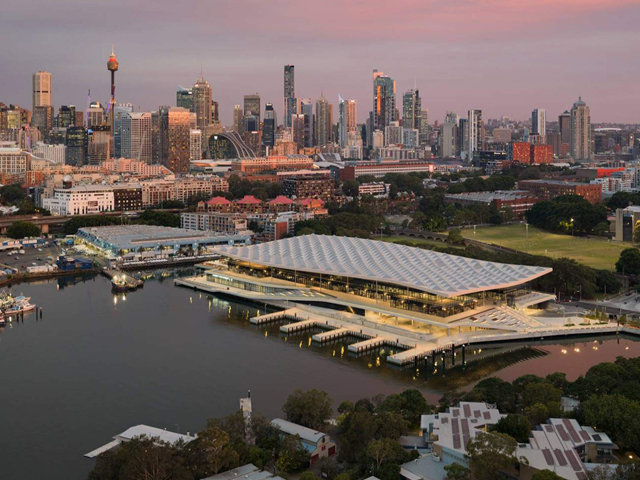
The globally recognised architectural marvel combines world leading engineering with state-of-the-art technology bringing together a fully operational wholesale fish market, where retail, dining, education and public space all come together under the one spectacular fish scale inspired roof. Designed by Danish firm 3XN GXN with Australia’s BVN Architecture and local landscape architects ASPECT Studios, the 10.4-hectare complex is now officially the largest fish market in the Southern Hemisphere.
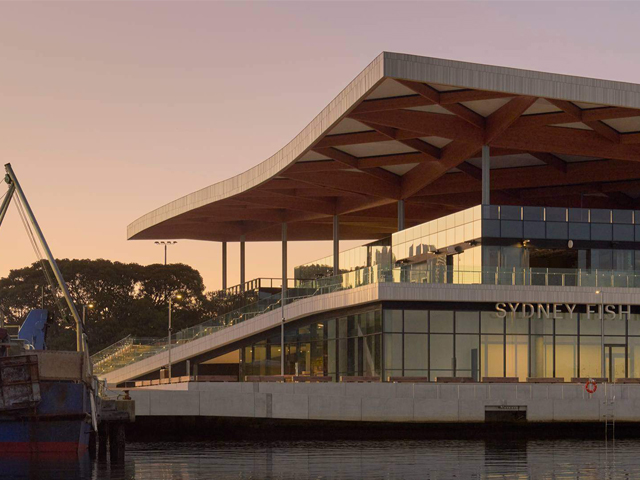
The project joins a line-up of the city’s most visited waterfront sites, including the Opera House, Harbour Bridge, Barangaroo and Darling Harbour. Unlike those tourist icons, however, the fish market is also a fully functioning industrial facility, operating around the clock.
“This transforms an underused part of the harbour into a vibrant public realm,” says Audun Opdal, senior partner at 3XN. “It blends a working commercial operation with high-quality public space, creating an authentic market experience on the water.”
Delivered by Infrastructure NSW for the New South Wales government, and opened by NSW Premier Chris Minns, it anchors the renewal of the once-neglected Blackwattle Bay and is expected to draw more than six million visitors a year.
Premier of New South Wales Chris Minns said: “Today Sydney opens the doors to what is undoubtedly the best fish market in the world — a new iconic Sydney landmark rising straight out of our harbour, showcasing world-class Australian seafood that gives locals and visitors another must-see destination in our city.”
Spanning 26,000 square metres, Sydney Fish Market now features 42 retailers and 19 seafood wholesalers, serving a world-class catch from within a state-of-the-art building. At the public market hall level, more than 12,000 sqm are devoted to fishmongers, restaurants, cafés, and specialty vendors. Designers separated pedestrian routes from industrial circulation so forklifts, trucks and workers can move safely alongside tourists and locals. Floor-to-ceiling glass keeps the harbour in constant view, giving the space the feel of an open-air market.
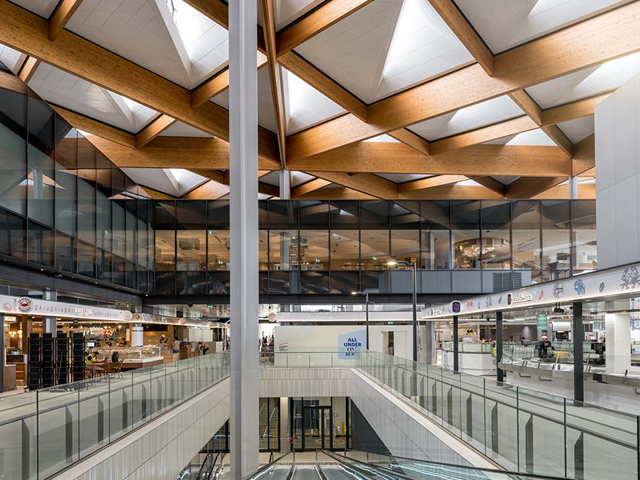
Retail, tourism, and wholesale operations now sit under one roof. Visitors can watch auctions in a modern Dutch-style system with up to 160 buyers competing at once. Large screens display prices and volumes and glazing along promenades allows the public to see into the normally hidden world of seafood trading.
Crowning the complex is a dramatic 20,000-square-meter floating roof, which is both stunning and unique in terms of its design. Constructed of exposed glulam beams and roof-lights assembled on Glebe Island, the roof utilises natural lighting to reduce energy consumption, while collecting rainwater for recycling and integrated solar panels which contributes to the daily energy consumption of the building.
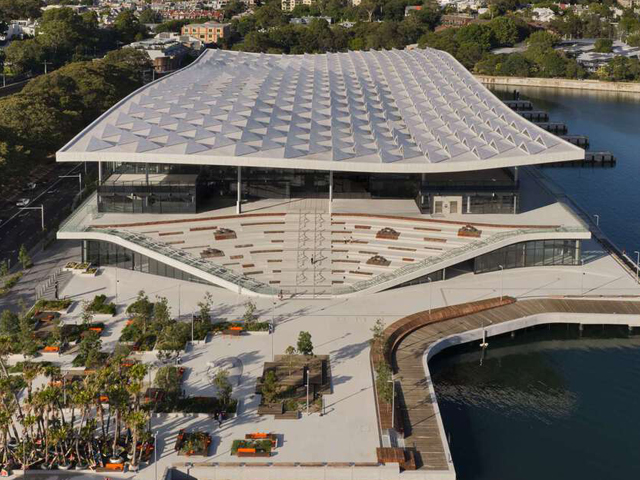
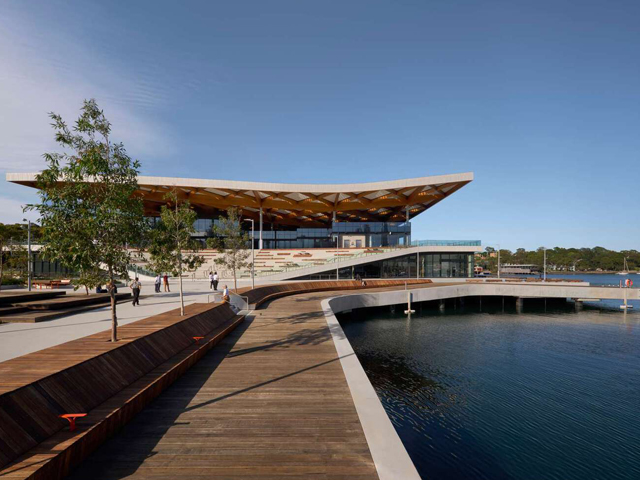
In addition to the building, the precinct features 6,000 square metres of public domain including a water play art feature, creative installations and a waterfront promenade where locals and visitors can connect, relax or stroll through.
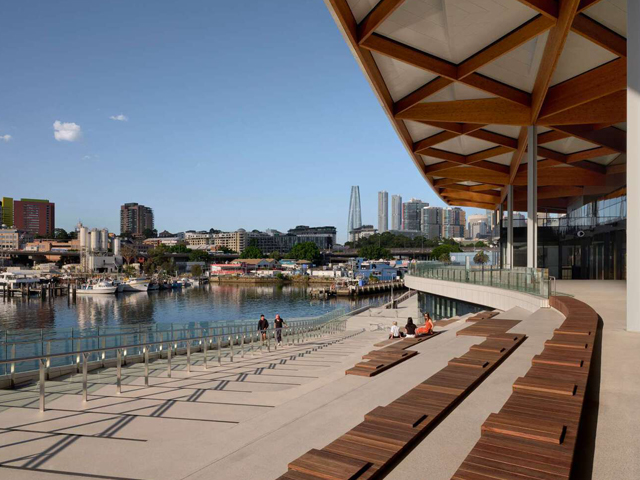
Louise Pearson, Studio Director, ASPECT Studios, describes, “Perched at the heart of Blackwattle Bay, the waterfront emerges as an inviting edge of water play and public art, celebrating cultures old and new. Native plantings and generous seating define the harbour, while an amphitheatre elevates the public realm into a lively stage. Green pockets and abundant seating introduce subtle ‘fishy’ references, while flashes of safety-red offer a crisp nod to the site’s industrial past.”
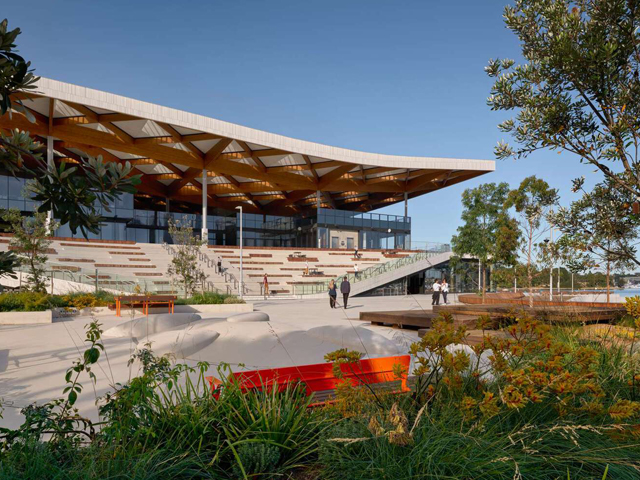
On the environmental front, the market achieved a 5 Star Green Star sustainability rating and diverts up to 80% of its waste from landfill-no easy feat for a food manufacturing facility.
More than a market, the project is meant to redefine how industry and public life coexist on the waterfront. This was underlined by Sydney Fish Market CEO Daniel Jarosch, who says, “The opening of the new Sydney market marks a defining moment for our organisation and for Sydney. This once-in-a-generation investment that supports the future of Australia's seafood industry while opening the workings of a real, operating fish market to the public.”
Photography by Tom Roe
Click here for our other Sydney Fish Market articles:



MORE NEWS
PROPOSAL TO TRANSFORM COCKLE BAY WHARF GREENLIT
CONSTRUCTION BEGINS ON GOLD COAST-LOGAN FASTER RAIL
FIRST INNER-SYDNEY SUBURB IN DECADES ANNOUNCED
NEW MASTERPLAN ANNOUNCED FOR WOLLONGONG SUBURB
FINAL STAGE OF SOUTHWARK GROUNDS DEVELOPMENT ALLOCATED