
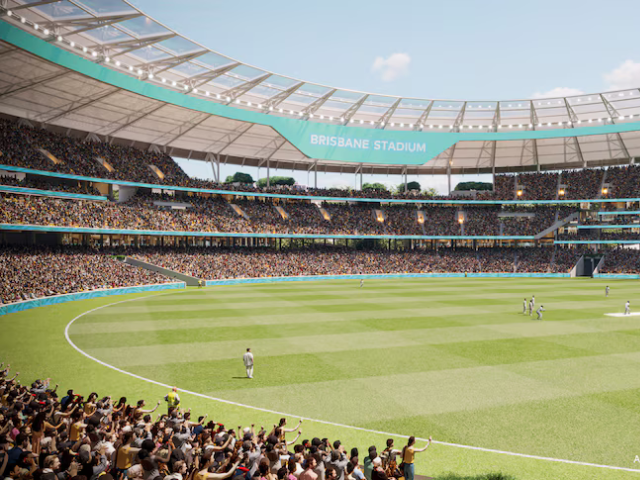
The stadium is intended to host the opening and closing ceremonies, athletics and Para athletics at the Brisbane 2032 Olympic and Paralympic Games, before becoming the home ground for the Brisbane Lions, Brisbane Heat and Queensland Bulls.
Announced early this week by the Games Independent Infrastructure and Coordination Authority (GIICA), the decision leaves the consortium as the sole remaining bidder, although the final construction contract has yet to be awarded. The companies will now work with GIICA and the stadium’s design team to finalise design details and construction methodology, with the Early Contractor Involvement process expected to conclude in the new year.
The selection follows a competitive process that began in October 2025, with BESIX Watpac and John Holland shortlisted in April alongside a competing joint venture of Built and Sacyr. Both teams subsequently worked independently with GIICA and the architects to assess the design and develop construction proposals.
Together, BESIX Watpac and John Holland companies have delivered a host of stadiums including Lang Park, the Gabba, Melbourne's Docklands stadium and Penrith Stadium.
BESIX Watpac chief executive Mark Baker said the company had "never been more ready" to help shape Queensland's Olympic legacy. "With a track record of delivering every major stadium in Queensland without missing an opening, a century of local heritage and our Brisbane-based headquarters, we are proud to progress the next stage of development for Brisbane Stadium," he said.
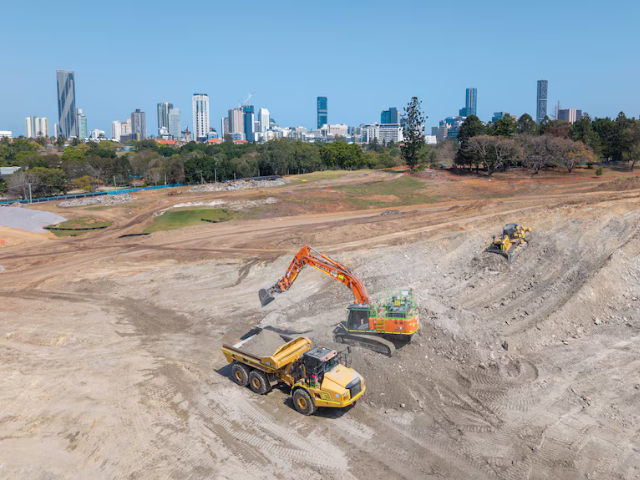
The site at Victoria Park was handed over to the Games Independent Infrastructure and Coordination Authority in June, with earthworks already underway ahead of the 2032 Olympic and Paralympic Games.
Earlier this year, the government announced it had selected Australian firms Cox and Hassell to design the stadium, alongside Japanese group Azusa Sekkei.
GIICA Chief Executive Simon Crooks said the early contract process had been comprehensive. "We are satisfied that the process has delivered the best-possible contractor for this second and final phase," he said. "Engaging two highly experienced construction teams in the design phase has meant we were able to rigorously test buildability, sequencing, risk and opportunity early. This collaborative process supports our commitment to delivering an outstanding Brisbane Stadium, while ensuring value for money and confidence in an on-time, responsible and appropriate build for Queenslanders."
The contract process for the stadium started in October last year, with the consortium to now work with the stadium's design team to finalise details and construction methodology. Olympics Minister Tim Mander said while negotiations were continuing it was an important and exciting step forward. "Now it is just a matter of trying to nut out the contracts so we can make sure there are no cost blowouts," he said.
The stadium is slated to cost about $3.6 billion, and forms part of the $7.1 billion infrastructure plan for the 2032 Games. When questioned about the cost of the stadium today, Premier David Crisafulli said he had never revealed the budget for individual projects, with details to be released when finished.
"It is about making sure we deliver the Games work within our agreements with the federal government for $7.1 billion and we are going to do that," he said.
Mr Crisafulli said there was more work to do before the contract was awarded. Contracts are set to be finalised in the new year, with construction to begin in 2027.