
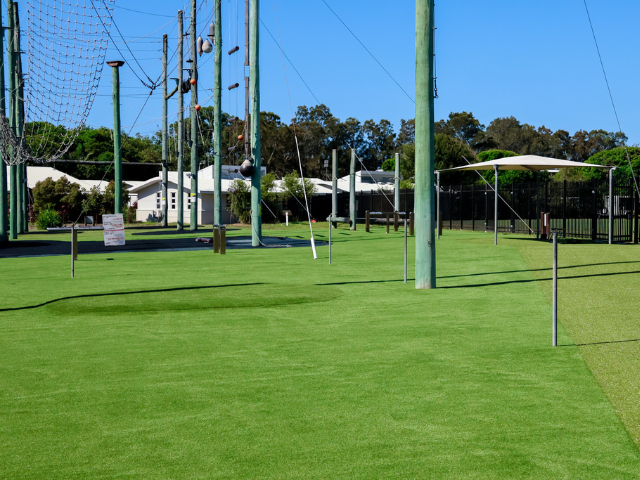
For landscape architects, builders and facility managers, a successful artificial turf project begins well below the visible surface. The product matters, but its performance will ultimately depend on how the entire system is designed, prepared and installed.
START WITH THE WAY THE SPACE WILL BE USED
A school activity area, childcare playground, apartment rooftop and commercial landscape all have different requirements. Foot traffic, recreation, accessibility, surrounding vegetation and maintenance expectations should be considered before selecting a turf product.
Pile height and appearance are only part of the decision. The chosen product and construction system must be appropriate for the intended use, anticipated traffic and site conditions. Play spaces may also require a tested shock-pad system selected to meet the project’s specified critical fall height.
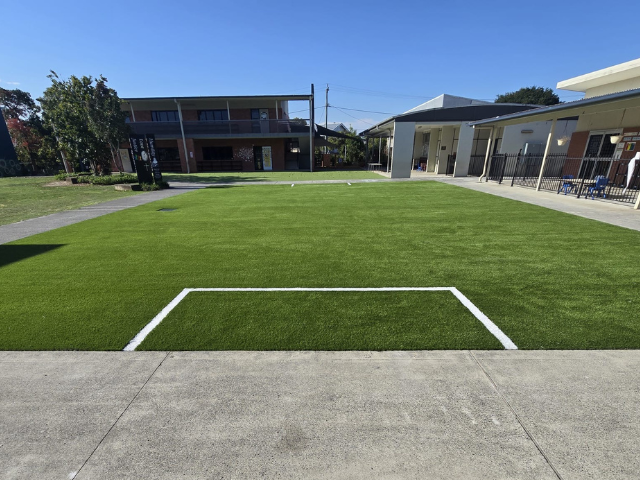
DESIGN DRAINAGE INTO THE COMPLETE SYSTEM
Heavy summer rain can reveal problems that remain hidden during dry weather. Effective drainage relies on more than perforations in the turf.
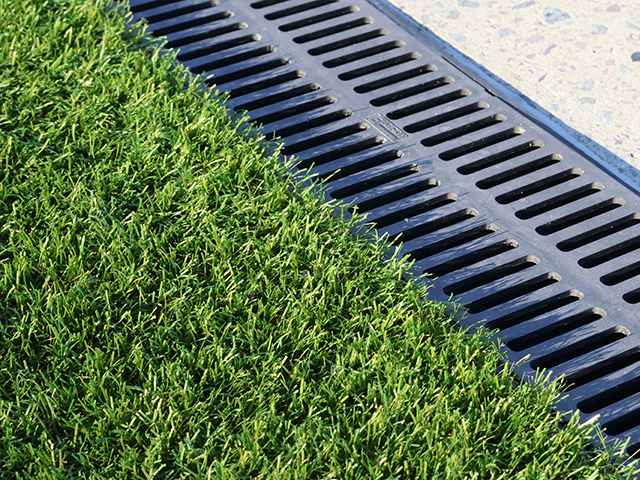
Site levels, subgrade conditions, base construction, edge restraints and the location of existing drains all influence how water moves through and away from the area. Rooftops and podiums introduce additional considerations, including drainage cells, protection layers and coordination with the building’s existing waterproofing and drainage systems.
Ecovia Turf’s ONE-DNA™ range features a permeable backing that allows water to drain through the surface. However, even a highly permeable product requires an appropriately designed and constructed base beneath it.
PREPARATION DETERMINES LONG-TERM PERFORMANCE
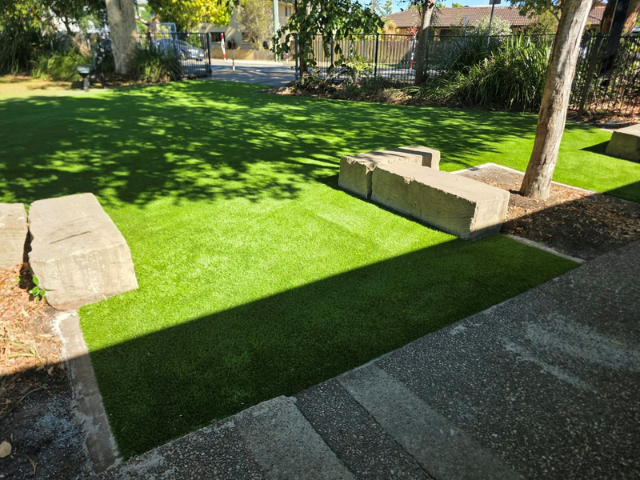
Insufficient excavation, poorly compacted materials or unresolved drainage issues can lead to movement, low spots and water retention. Thorough site assessment and preparation help create a stable surface that continues to perform through demanding weather and regular use.
Ecovia manages preparation and installation through its own experienced teams. Depending on the project, the scope may include excavation, base construction, drainage, edging, shock pads, turf installation and coordination with builders or other landscape contractors.
CONSIDER PERFORMANCE AND MATERIALS TOGETHER
A resilient outdoor surface should also support the project’s broader sustainability objectives. Ecovia’s ONE-DNA™ artificial turf uses a single-polymer construction, with the fibres and backing made from polyethylene. The range is PFAS-free, manufactured without traditional latex or polyurethane backing, and designed for recyclability at the end of its useful life.
By considering use, drainage, preparation and material composition from the outset, project teams can create attractive outdoor spaces that are better equipped for Queensland’s challenging summer conditions.
To discuss an upcoming school, playground, rooftop, recreation or commercial landscape project, contact Ecovia Turf via the links below.
