
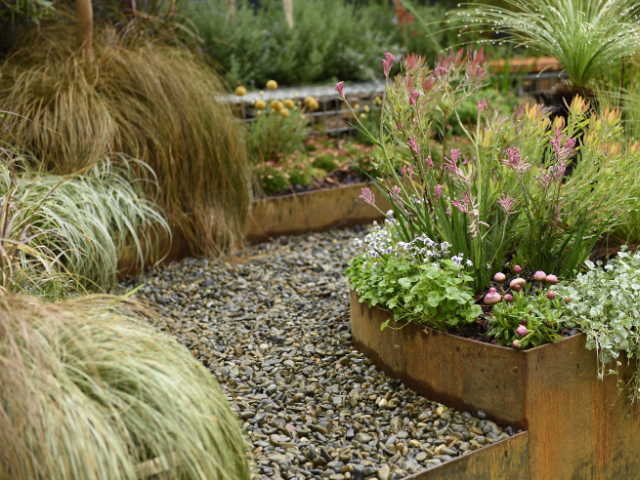
The way a lawn meets a garden bed. How two different materials transition into one another. A curve that continues exactly where it should, or a change in level that feels deliberate rather than something that had to be worked around onsite. They are not necessarily the things someone will point out when they first walk into a space, but they can make an enormous difference to how resolved the overall landscape feels.
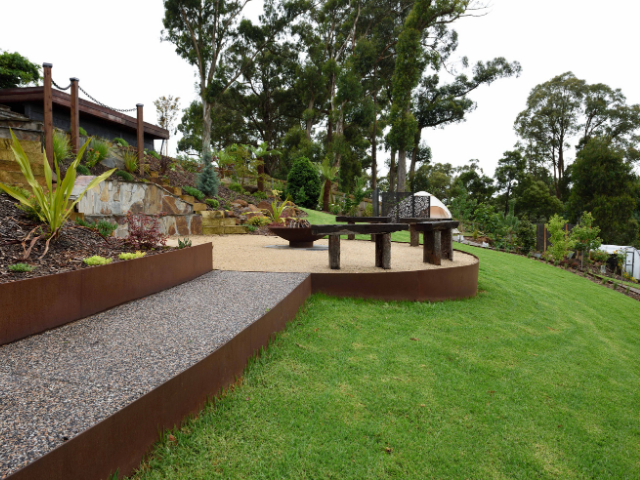
And getting those details right often starts much earlier than installation.
Material choice, levels, drainage, junctions and how individual elements will actually be constructed all need to work together. Considering these things during the design and specification stage can make the transition from plan to finished landscape much smoother.
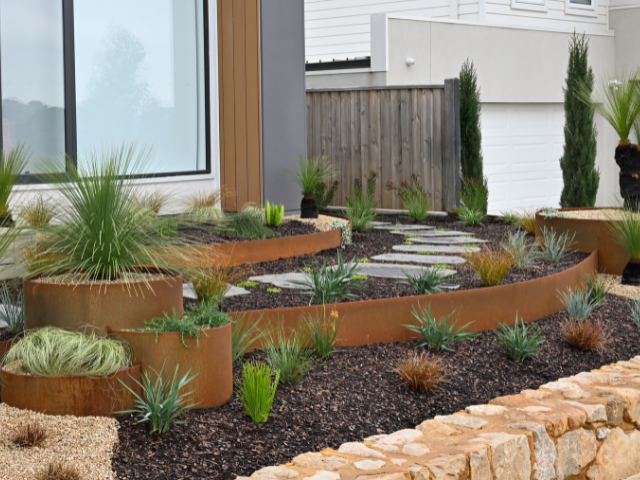
Edging is one of those details that can easily be treated as purely functional.
Of course, it needs to separate materials and contain garden beds, pathways or turf. But it can also help establish the lines of a landscape, carry a curve through a design, create changes in level and provide structure amongst softer planting.
Steel lends itself particularly well to this because it can perform that structural role without necessarily becoming the feature. Depending on the project, it can create long straight runs, gentle curves or more detailed shapes while maintaining a consistent finish throughout the landscape. It is also worth thinking beyond the day a project is completed.
Landscapes change. Planting fills out, soil settles, materials weather and spaces are used in ways that aren't always obvious on a plan. The details need to continue doing their job as everything around them evolves.
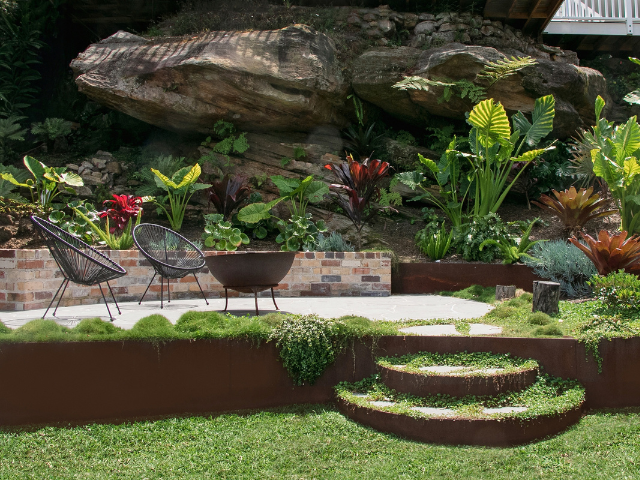
At ShapeScaper, the team see this across projects of all shapes and sizes. Often, the most successful spaces aren't relying on one element to do all the work. Instead, there is a level of consideration carried through the entire landscape. And whilst those details may not be the first thing you notice, they are often what quietly make the space work so well.
Visit ShapeScaper via the links below to learn more
