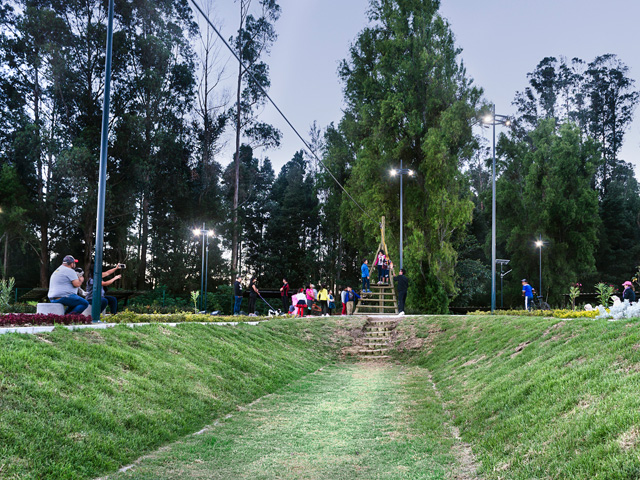

Designed by architectural firm Alcaldía de Quito, Parque 6 de Junio (Park June 6) is a newly transformed public space spread across 14,000m2 in the city of Quito in Ecuador. According to the architects, the park aims to become a space of distraction for the 16,000 residents of the region, with facilities for people of all ages.
Community input was encouraged as part of the design process, with residents called to participate in difference activities in order to establish what challenges the neighbourhood faces and what the space needed in order to work for the community. Exploratory marches and workshops were some of the types of activities utilised to determine these needs, prior to construction of the public space, and served as the starting point for the community to assume ownership of the project.
The park makes use of different resources to preserve the environment. The incorporation of natural roads respects and recalls old trails used by park users, and also creates a natural drainage system, allowing surface runoff waters return to the ground. The use of native vegetation, infiltration ditches, low-consumption sanitary batteries, solar lighting and the conservation of existing trees are all part of the project's environmental consideration.
The design process for the park upgrade made use of existing topographic elements, such as an old cycling circuit, and vegetation to generate difference experiences for visitors. The prevailing features were therefore utilised to develop small hills to create localised play structures, like slides and climbing walls.