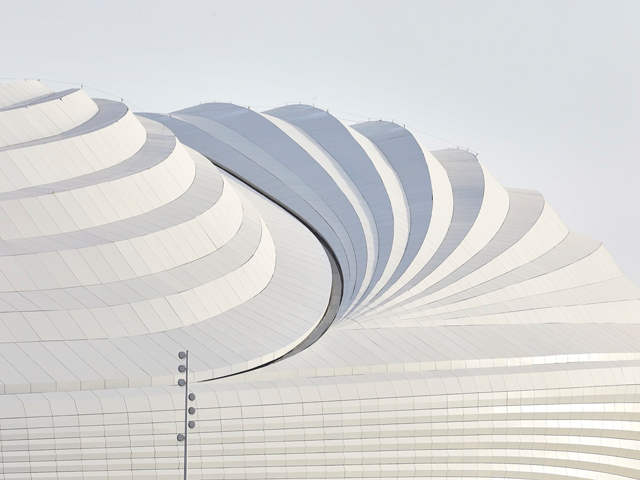
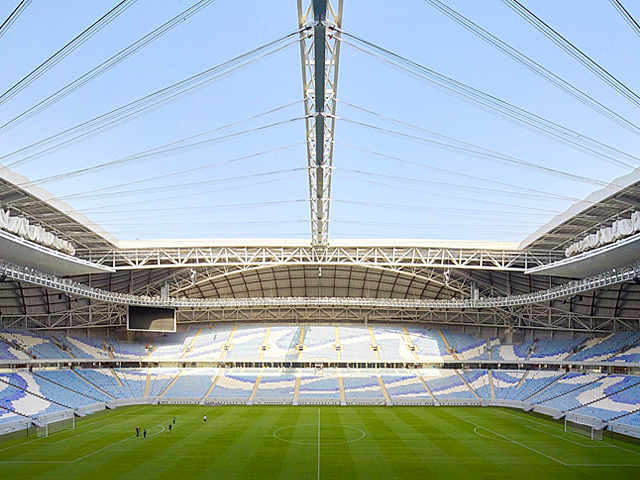
Al Janoub Stadium, situated in the city of Al Wakrah in Qatar, will host the cup’s quarter-final. The stadium began construction in early 2013 and was completed May 16 2019. Described as “an extraordinary stadium for an adventurous city”, it features a flexible design that allows for the 40,000 seats to be reduced to 20,000 after the conclusion of the World Cup. The temporary seats were designed to be demounted and transported to a developing country that is in need of sporting infrastructure. After the Cup, the stadium will be the home ground for the Al Wakrah Sports Club. 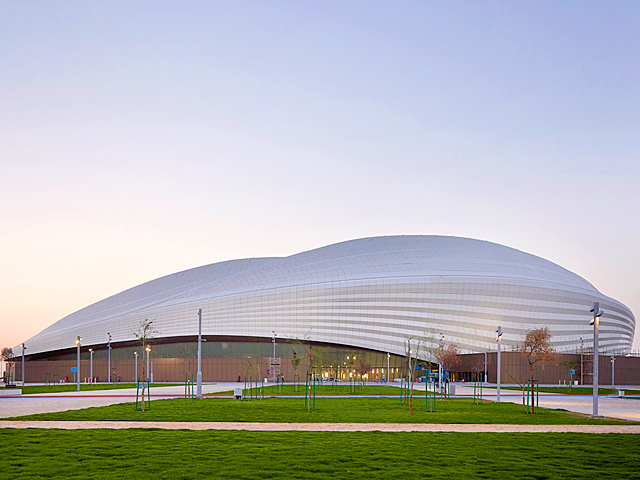
Image from The Supreme Committee for Delivery & Legacy
The fully retractable roof and the seating bowl’s cooling system allows for the stadium to be used year-round, with the ability to reduce spectator areas to 18°C and the field to 20°C. 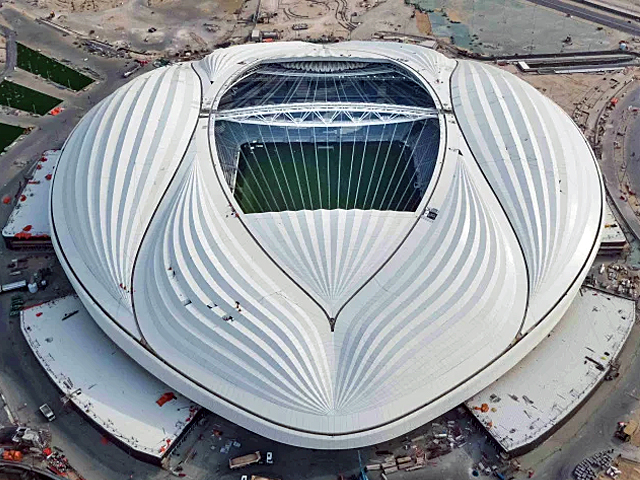
The design of the stadium is inspired by and reflects the nautical history and tradition of the coastal city of Al Wakrah. The design of the local sailing ships, called dhows, and the region’s fishing and pearling industries are incorporated in the construction of the stadium, through the roof and the precinct’s responses to the climate and functional requirements. “We wanted to respond to the client’s brief, which was to do something which resonated with Al Wakrah, so we started by looking at the dhow,” said Jim Heverin, director at Zaha Hadid Architects. “We didn’t want to literally blow up a dhow boat so we looked at abstracting it in order to create something dynamic and organic — something that has multiple interpretations.” 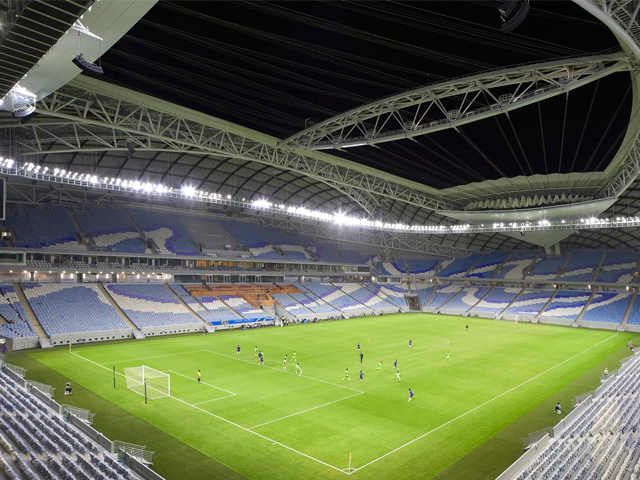
The stadium is topped with a large white operable roof, constructed from cladding made with pleated PTFE fabrics and cables, in an abstract mimicry of a dhow sail that has been turned upside down. This is further expressed in the stadium’s envelope shape, the details of the overall design and the materials used. The beam structure of the stadium echoes the interior structure of a dhow’s hull. The roof was designed by Schlaich Bergermann Partner. 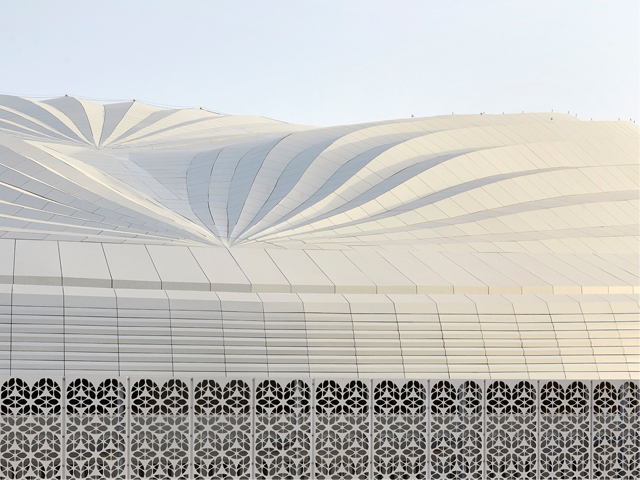
The facades of the stadium are slandered outwards and tapered, again in reflection of the pleating of a dhow’s sails. The large overhanging eaves of the stadium incorporate strips of metal cladding that is reminiscent of the timber structures used in the ships as well. 
In addition to the stadium, various over precincts and public spaces are beginning construction in the area. The Supreme Committee for Delivery & Legacy promised that “Supporters will also find plenty to do before and after matches, whether it’s taking a stroll along the waterfront, buying unique local wares at the souq, or discovering the area’s rich history at a museum.” 
Images © Hufton+Crow