
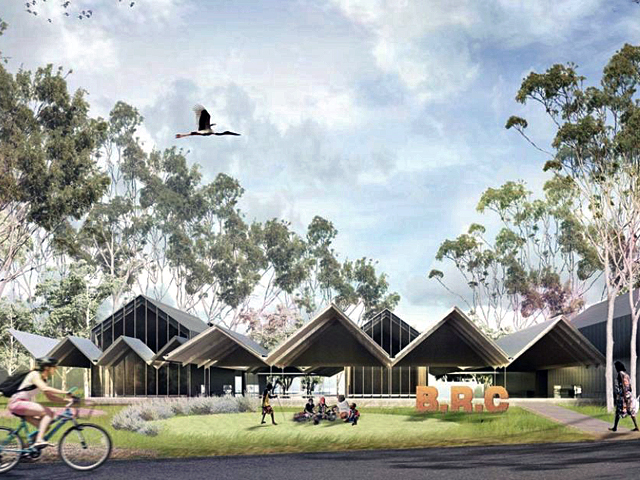
Jabiru, with a population of 1100 people, is located 235kms east of Darwin and sits on the World Heritage listed Kakadu National Park. The plan is a collaboration with the Gundjeihmi Aboriginal Corporation and design teama Architects Stafford Strategy, NAAU and Enlocus, and comes in the wake of the town being returned to the traditional Aboriginal custodians, the Mirarr People.
The Kakadu region features the oldest known record of human settlement within Australia, with the Aboriginal people continually occupying the area for over 50,000 years, and thus this return of ownership marks a very significant step in the history and future of the region.
Currently owned by Energy Resources Australia, Jabiru was established as a mining town in 1982 and houses the Ranger Uranium Mine. The plan will build on the sustainable tourism boon from Kakadu’s environmental and cultural heritage and revitalise Jabiru, creating a bright future for the old town. 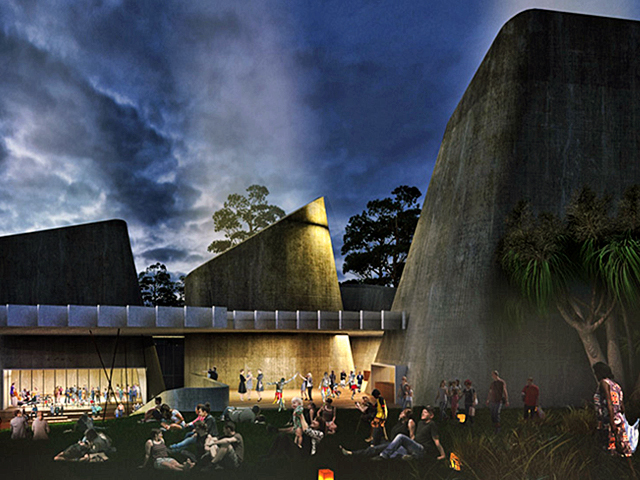
“We need to reorient the sense of arrival to Jabiru,” explained Justin O'Brien, chief executive of the Gundjeihmi Aboriginal Corporation. “At the moment you [arrive to Kakadu] at the back of all the shops — there's no real sense that you're in Kakadu National Park at all. It's a matter of balancing the interests of the tourism industry and the traditional land owners of Kakadu in a sustainable and economically positive way.”
The region will be removed as far from the effects of mining as possible, with a sustainable $446 million masterplan leading the way to create a town that is embedded in wellbeing and the surrounding landscape and environment. The plan includes revamping the town’s structure to provide direct arrival access to a World Heritage Centre, and the implementation of a five-star hotel and glamping options. 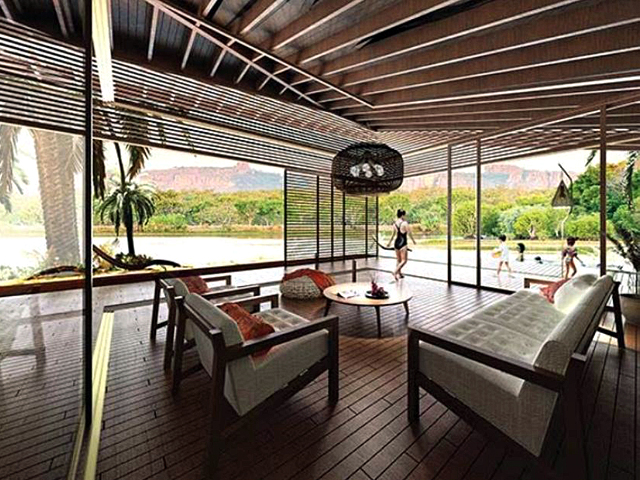
The lake will be cleaned up to provide a place for people to swim, which includes removing the crocodiles that are native to the area. Hotels and housing will be built along the lake, offering exclusive accommodation for tourists and residents. The masterplan also includes proposals for an airport, an education precinct, a Bininj (traditional owner) Resource Centre, an entertainment hub and various infrastructures including roads and bridges.
“These new buildings are designed around incremental layers of enclosures,” Naau director Ben Milbourne said. “This is a sensitive respect for local building tradition and the way that traditional owners occupy buildings within the community.” 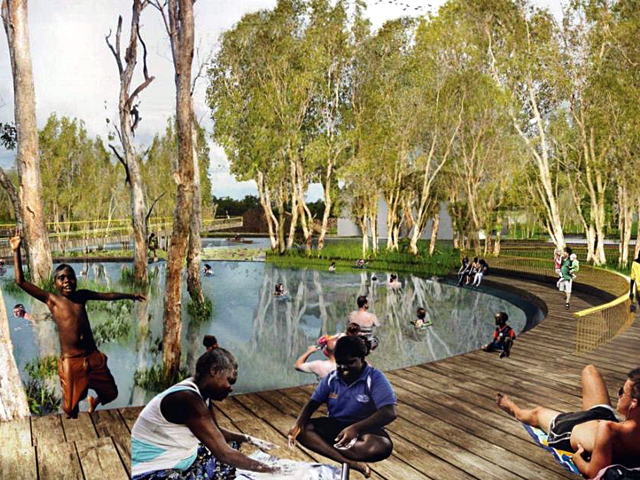
The mine will be closed in 2021, signifying the town’s ownership being transferred back to the traditional custodians. The current town itself will be demolished in that same year, with the revitalised infrastructure to be completed by 2028.