
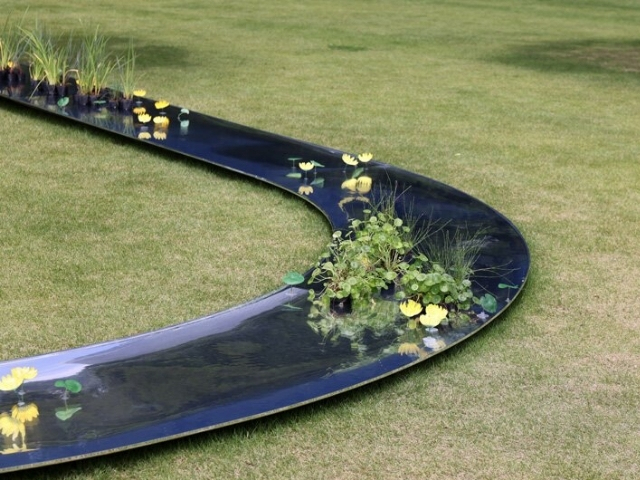
Hama Rikyu Gardens is located in central Tokyo, it features a tea house, and tide changing seawater ponds that contrast the skyscrapers in the neighbouring districts. The gardens were originally a feudal lord’s Tokyo residence, then changed to a strolling garden and imperial detached garden before opening to the public in 1946.
The gardens are already centred around a large pond and reflect the sky and surroundings of the historical park. The pavilion, titled ‘Suimei’, is an array of gentle flowing streams which seem to be unmoving when viewed from a distance. The river’s design is built with the intention of evoking visions of the future alongside the memory of Tokyo’s past.
Sejima said that the “slow water represents the connection of the past, present and future.”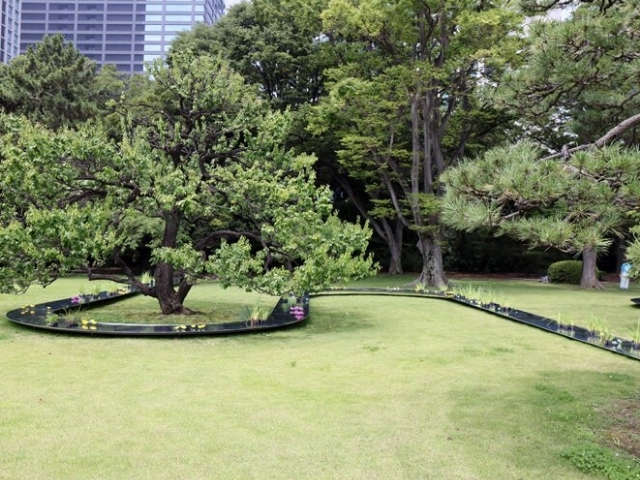
This project was drafted as part of Pavilion Tokyo 2021. The event invites highly skilled architects and artists to design new and interesting pavilions that highlight the future of architectural design and art, paving the way for onlookers to see what’s to come in the creative industry. The installations all surround the National Stadium, with 2021 being of particular importance with the upcoming Olympic Games taking place in Tokyo.
The pavilion will aid in offsetting the densely packed Shiodome district and was organised by the Tokyo Metropolitan Government and Arts Council Tokyo. The park is also home to various traditional Japanese foliage including cherry, Nanohana and plum blossoms.
Sejima’s architecture career began in 1981 after she obtained a Masters in Architecture from Japan Women’s University. She went on to win Young Architect of the Year from the Japanese Institute of Architects in 1992 and now operates SANAA. Sejima’s main goal in any project is to consider a site’s social use and potential for adaptation, meaning we may see some changes with Suimei.
Images via Design Boom