

The two million square metre ‘Net City’ is the size of Midtown Manhattan and will be among China’s first interconnected districts with office buildings, residential areas, public entertainment venues, parks and a waterfront.
NBBJ has unveiled images of its latest venture with the internet giant Tencent. Responsible for the company’s global headquarters back in 2018, the architecture firm created the ‘Net City’ development, including working and living environments, next-generation offices, living spaces, schools and retail. Generating an around-the-clock community, the project is more than just a neighbourhood. 
“Made for humans without the distraction of motor vehicles and the noise, pollution, and speed”, the different components of the masterplan, from buildings, blocks and open spaces, were considered accordingly. The car-free neighbourhood puts in place an open and porous campus, rich in public spaces, like commons, groves, wetlands, and sports and recreation parks. It is connected to the rest of Shenzhen, through subway lanes, bike paths, and ferries. 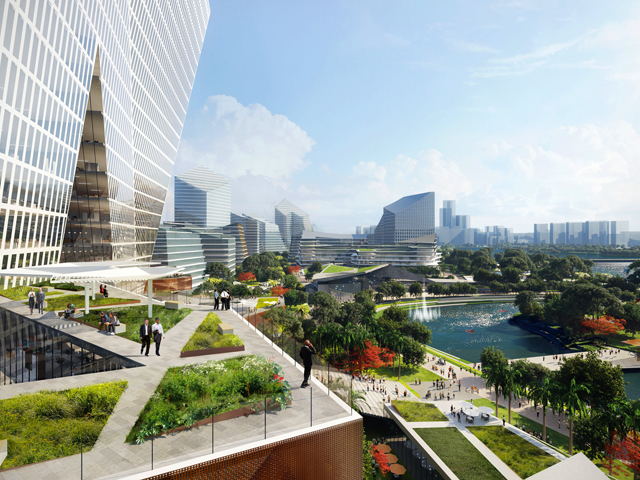
Net City features “terraced buildings of different scales and heights, […] interspersed across a series of green pathways”. Generating human-scale feel and organic experiences, the project opens up to nature and water. 
With sustainability at the core of the design process, the masterplan incorporates photovoltaic panels, sensors that track environmental performance and flooding, and a comprehensive transportation network that prioritises pedestrian access, bicycles and public transit. The project collects water and manages runoff and flooding by planting mangrove trees at the shoreline’s edge. 
Via ArchDaily | Images courtesy of NBBJ