SOLAR TREES MARKETPLACE
20 May 2021
Taking inspiration from Shanghai’s forests, Australian firm Koichi Takada Architects has designed a series of architectural trees to branch out and form a canopy above a new marketplace in China.
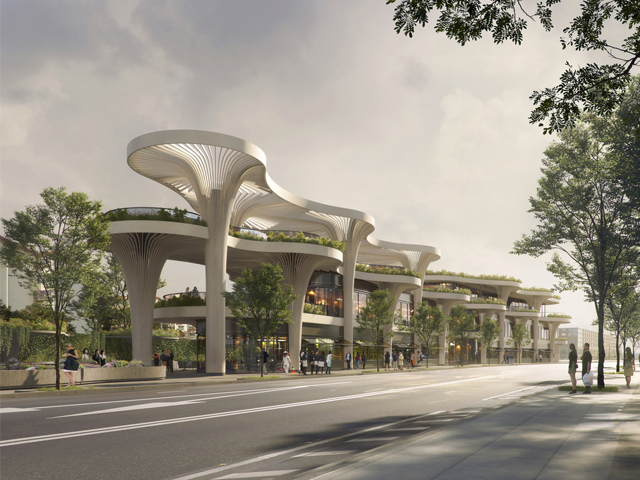
With its open, biophilic design, the Solar Trees Marketplace will be an extension of the outdoor public space, reinterpreting the traditional Chinese market as a community place. 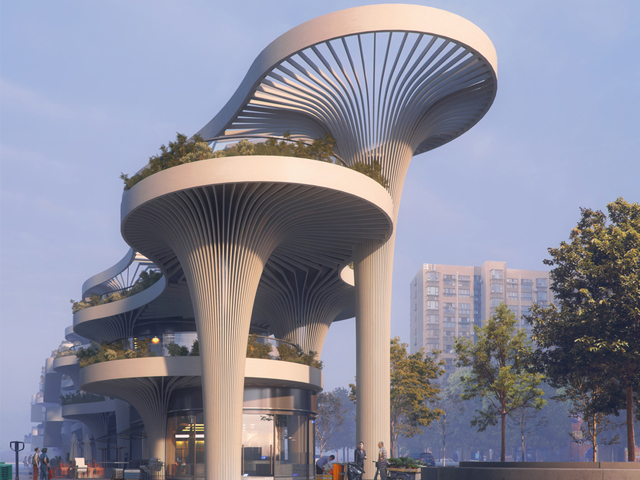
Located in the Minhang district, the project is part of the new Shanghai Tian An Caobao Road Area Residential Masterplan and, once completed, will serve as a gateway for the development. The project adheres to the goal of transforming one of the world's most polluted cities into a healthier and more liveable urban environment. As the team suggests, the idea of a forest within the urban setting is also a reference to China's commitment to becoming carbon neutral by 2060. 
The marketplace will feature modular stalls, reminiscent of the traditional marketplaces. The design makes use of sustainable features such as natural ventilation and solar panels. The pillars that branch out to form a timber canopy are a nod to Shanghai's forests, while the biophilic design echoes the green spine unfolding within the residential masterplan. The latter features trees and shrubs native to Shanghai, creating a new park. The project is currently under construction and is due to be completed in early 2022. 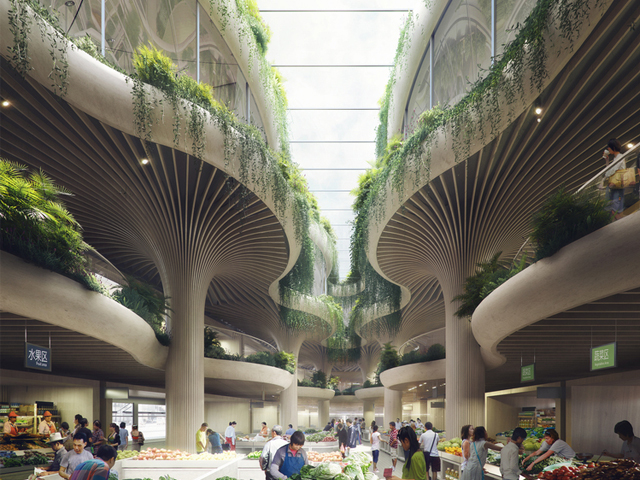
The Solar Trees Marketplace is the latest in a series of projects where the Sydney-based practice draws inspiration from nature and works with sustainable design principles, with the aim of creating a more liveable urban environment. These series of designs include the Urban Forest in Brisbane, a 30-story mixed-use residential high-rise with one of the world’s most densely forested vertical gardens, or the Sky Trees project in downtown Los Angeles. 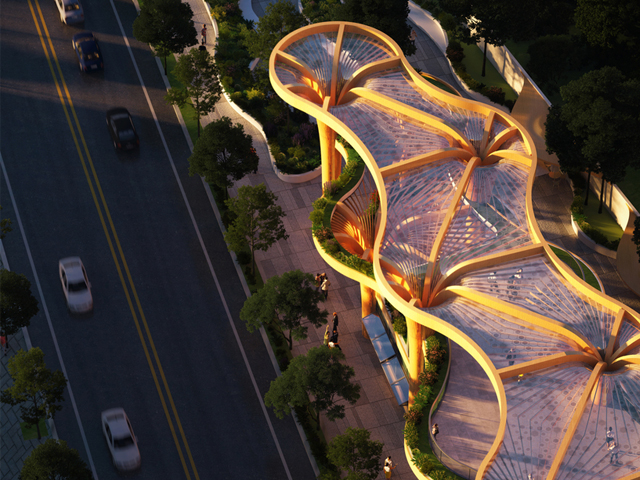
The work of Koichi Takada Architects spans multiple programs and scales, ranging from interior design to single-family houses to large scale mixed-use developments. The studio's projects include Infinity Residential Building, the ARC, or interiors of the National Museum of Qatar. 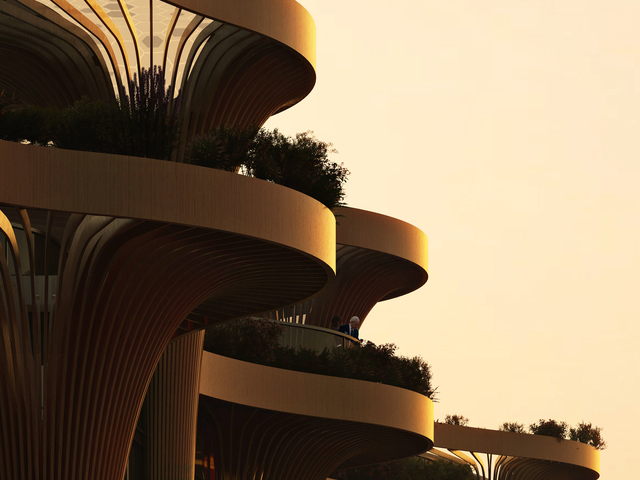
Images via ArchDaily