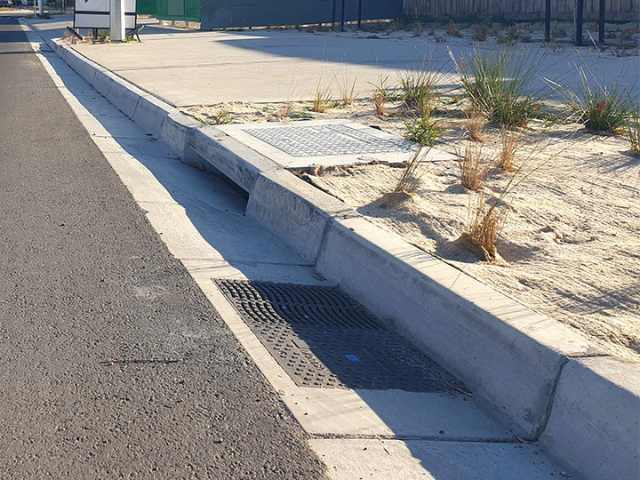
PROBLEMS WITH TREE ROOTS SOLVED
05 Mar 2012
Problems with tree roots, moisture and reactive soils? Find out the six critical points that will put an end to these problems once and for all.

Six critical points to solve problems with tree roots, moisture and reactive soils.


Placement
Normal placement of the barrier is to locate it around the structure, out from and parallel to the footings of the structure. Try not to surround the tree. Our preferred method is placing the root barrier along beside the building, path, road etc so that the tree roots cannot gain access to the structure. Root Barrier works as a waterproof seal protecting the soil under the structure from moisture loss laterally. The structure prevents loss of moisture vertically and so the moisture content of the soil can be stabilised and will stay constant.
After installation the soil under the building can be rehydrated to return it to the moisture content that it was when the building was built.
Working in from the drip line, the closer you get to the trunk the higher the risk of damaging or destabilising the tree. 50% of the distance from the drip line to the trunk is regarded as the closest you can cut without major risk to plants health. If it is necessary to trench closer than halfway towards the trunk, it would be advisable to en-gage the services of an arborist to assess the tree prior to the work being carried out, and to help nurse the tree through the period of installation.
Area
The area of good soil that the plant will require to live a healthy life may be calculated by multiplying the radius of the mature plant canopy by p r2 x .3m. The answer will give you the cubic volume of good soil re-quired. If works require the ground surface area is not available for the plant, special pits filled with quality soils, drainage etc may provide the answer.
Depth
Depth is determined by a civil engineer’s assessment of “the zone of influence” in the soil. In “normal” reac-tive clay depths between 1500mm and 4 metres may be expected, on the other hand if you strike rock at 700mm, the moisture cannot move through it then that is deep enough.
Seal
Seal Sodium Bentonite is used to seal the bottom of the trench and bind the bottom of the root barrier to the undisturbed soil. In summary take the barrier down to soil that nothing will move through and bind the root barrier to it.
Length
Sufficient to protect the structure from the effects of moisture change in the soil. BSA guidelines consider the following dis-tances as reasonable. Structures closer than these distances to trees must be protected from, or be specially engineered to with-stand the effect of the tree/s.
Height of Tree(h) Distance from house (d)
d = 1 h for class H and M sites.
d = 1.5 h for class E sites.
d = 2 h for rows or groups of trees.
Top Finish
Root Barrier must be finished above the ground or sealed into concrete so that roots cannot grow over the top of it. See adjacent options.
For more information contact Root Barrier on 1300 136 644 (Australia only); international +61 7 3861 0141.
Visit: www.rootbarrier.com.au



MORE NEWS
PERFORMANCE ENHANCING SPORTS FACILITIES WITH GEOFABRICS
EXPLORE SHADEFORM'S DIGITAL PRODUCT SHELF FOR 2026 PROJECT PLANNING
SPANISH BUS STOP ACTS AS URBAN OASIS
MAJOR DEVELOPMENTS IN MELBOURNE'S AIRPORT RAIL LINK

FIRST INNER-SYDNEY SUBURB IN DECADES ANNOUNCED