

Get a copy of the ODS book

Storm Water Drainage (Outdoor Design Backgrounder)

3 November 2011

Storm water drainage systems are designed to drain excess rain and ground water from hard landscape surfaces such as roads, paved areas, roofs and car parks. A storm water drainage system generally consists of a series of street gutters that feed in to increasingly larger pipes and holding tanks as they progress through the system until the water is flushed out to sea via natural rivers and watercourses.


Storm Water Drainage Inlets

Storm water drainage Inlets let the water in to the system. They are typically graded, which means large objects like litter are kept out. Side inlets, which consist of a small slot to the side of the street gutter, perform the same function with less filtration of gross materials.


Storm Water Drainage Sumps and Catch basins

The storm water drainage inlet usually leads to a sump immediately below the grating, which acts as a trap. Storm water drainage traps will hold stagnant water during dry times and will remove sediment and other pollutants from the water flow. Storm water drainage catch basins can pre-treat the water by removing gross pollutants before the water reaches other treatment areas such as large storm water retention basins. At this stage storm water is dirty, containing gasoline, garbage, motor oil, heavy metals, pesticides, fertilisers, and street detritus.

Storm water drainage Traps require maintenance and have to be dredged from time to time to ensure that the full capacity of the trap remains available.


Storm Water Drainage Piping

After leaving the storm water drainage trap the water is piped via a number of pipes to a point of discharge. The type of piping used varies according the age of the city – many Australian cities have old concrete and terracotta pipes still in use for storm water drainage.


Storm Water Drainage Gross Pollutant Traps (GPT)

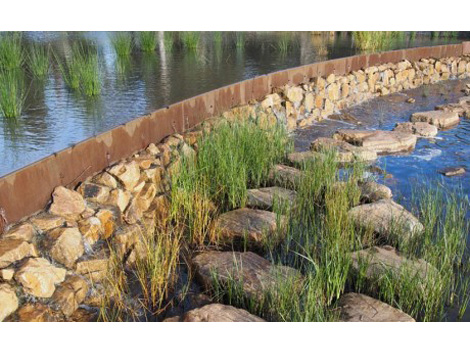
Larger traps often form part of the storm water drainage system, and these act to further treat the water before it reaches its destination. Different physical structures can help remove gross waste such as litter and street detritus. The structures might resemble steps, waterfalls or large basins in a wide variety of materials including concrete, brick, metal and plastic.


Storm Water Drainage Outlet

The outlet of the storm water drainage system is often covered by a grating and acts as the final barrier before the water is delivered to a natural watercourse like a river or sea.


Storm Water Drainage Dry Well Systems

Storm water drainage dry well systems slow the pace of the water and let it dry out slowly either via evaporation from a catchment basin or through a network of slotted pipes that feed the storm water gradually back in to the water table.


How Storm Water Drainage Systems Reduce Water Flows

Storm water drainage management workers around the world have concerned themselves with the reduction of storm water flows. As hard landscape materials have gradually taken over in the built environment, storm water run-off has increased to a level that often overwhelms civil storm water drainage systems, and permanently alters the water table of the region.


To avoid these undesirable outcomes the storm water management industry has been focusing on storm water drainage products and techniques that slow the pace of storm water, and feed more of it back in to the local water table.


Techniques for this type of storm water drainage management include:

• Directing storm water to open swales that give the run off a chance to soak in to the ground.
• The development of permeable paving materials also helps as they deliver a hard surface suitable for the modern landscape but which allows water to seep through to the local soil.
• In many areas storm water retention tanks have become mandatory in order to keep water back and then slowly release it back in to the system at a more desirable pace.

Outdoor design article tags: Storm Water Drainage. Storm Water Drainage Systems. Reducing Storm Water flow. Storm Water Drainage Gross Pollutant Traps. Storm Water Drainage Sumps. Storm Water Drainage Catch basins. Storm Water Drainage Dry Well Systems.

This article is published by Outdoor Design Source, Australia's most comprehensive external works directory of products and services. Featuring suppliers for landscaping, playground equipment, shade structures and outdoor lighting in all its applications to erosion control, drainage, street & outdoor furniture, retaining walls, wholesale nurseries and so much more. Outdoor Design Source is the essential reference for all specifiers in the landscape, civil and amenities industry.

Join our Newsletter

For all the latest news in the industry

Join Now

Promote Your Business

Add your business to our directory

Join Now

Industry Associations